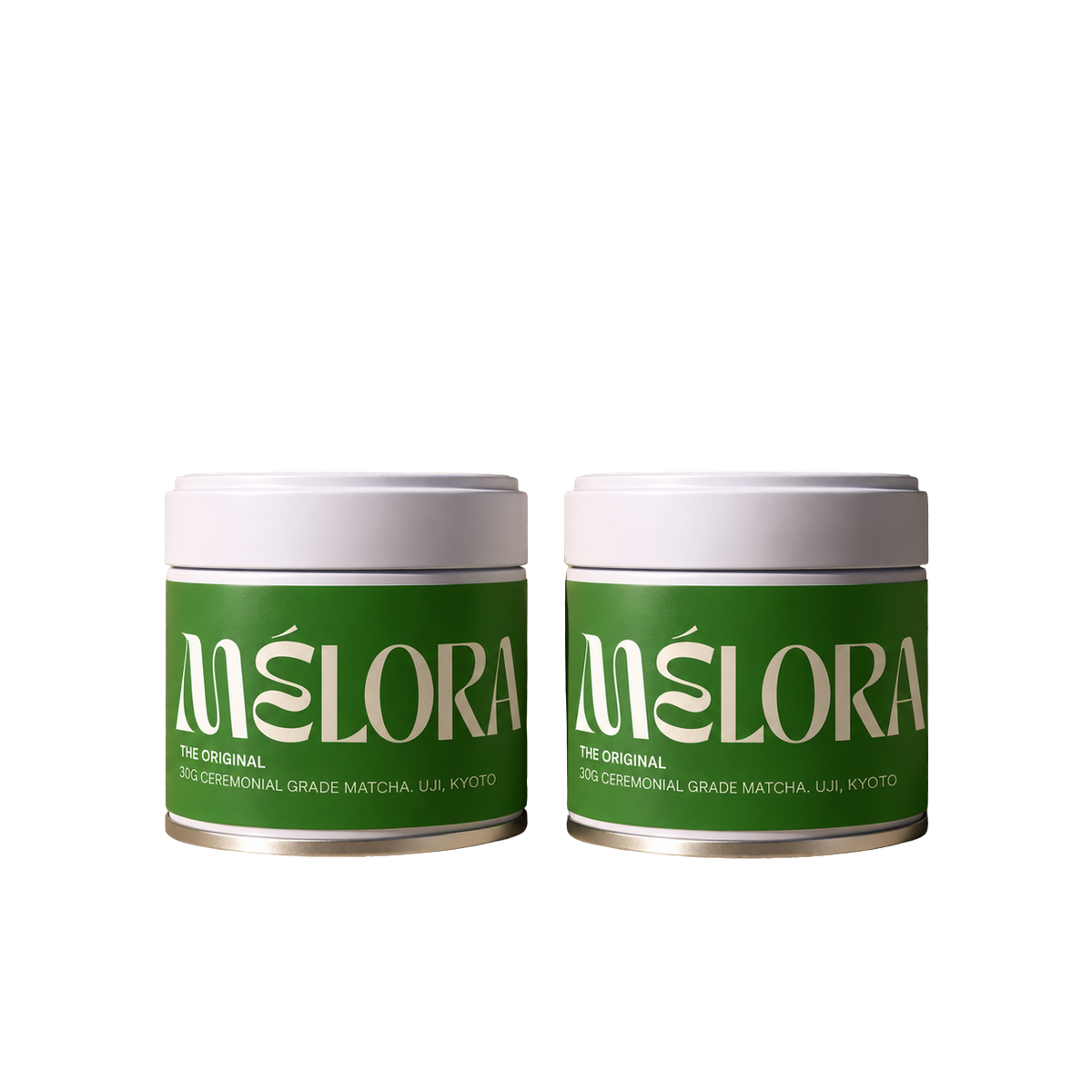
How to Make the Perfect Bowl of Matcha at Home

Category: The Ritual | Reading time: ~4 min
Making matcha properly doesn't require years of training or an expensive setup. It requires the right product, the right temperature, and a little patience. Get those three things right and the rest follows.
Here's exactly how we do it.
What you'll need
-
A matcha bowl (chawan) - wide and shallow is better for whisking
-
A bamboo whisk (chasen) - at least 80 tines for a good froth
-
A fine mesh sifter or tea strainer
-
A tea spoon or bamboo scoop (chashaku) for measuring
-
Hot water - not boiling
Step 1: Warm your bowl
Before you do anything else, pour a small amount of hot water into your bowl to warm it. Swirl it around and discard. A warm bowl keeps your matcha at the right temperature for longer and protects the whisk from the shock of cold ceramic against hot water.
While you're at it, dip your whisk briefly in the warm water before you start. This softens the tines, makes it more flexible, and helps it last longer.
Step 2: Sift your matcha
This step is often skipped, but it makes a real difference. Matcha clumps - it's a fine powder and it absorbs moisture from the air. Sifting it directly into your bowl breaks up those clumps before you add water, which means a smoother, lump-free drink.
Use 2g for a lighter, more delicate bowl. Use 3g if you want something with more body and intensity. A standard 30g tin gives you between 10 and 15 bowls depending on how you like it.
Step 3: Water temperature matters
This is where most people go wrong. Boiling water - 100°C, will scald the matcha and destroy the delicate amino acids responsible for its sweetness and umami. You'll get bitterness and a flat, one-dimensional flavour.
The right temperature is between 70°C and 80°C. If you don't have a temperature-controlled kettle, boil your water and let it sit for 3 to 5 minutes before pouring. It doesn't need to be precise - you're aiming for hot but not aggressive.
Add approximately 60 to 80ml of water to the bowl.

Step 4: Whisk
Hold the bowl steady with one hand and grip the whisk handle loosely with the other. Move the whisk in a brisk W or M motion - not circular. You're trying to create friction and incorporate air, not stir.
Whisk for 20 to 30 seconds until you see a layer of fine foam forming on the surface. The matcha should look aerated and slightly frothy. That foam is a good sign - it indicates the amino acids are intact and the temperature was right.
Step 5: Drink it
Matcha doesn't sit well. The powder will start to settle within a few minutes, so drink it while it's fresh and still foamy. Lift the bowl with both hands if you want the full ritual experience. Or just drink it - whatever works for you.
A note on adding milk
There's nothing wrong with making a matcha latte. But if you haven't tried ceremonial grade matcha on its own yet, do that first. Good matcha doesn't need milk, sweetener, or anything else. The flavour is already smooth, naturally sweet, and complex.
Milk and syrup are great additions to culinary grade - they balance out the bitterness. With ceremonial grade, you're masking something worth tasting.
On your whisk
A good bamboo whisk is worth caring for. Rinse it in warm water after use - never soap - and store it on a whisk holder to preserve its shape. With daily use, replace it every 2 to 3 months. A worn or broken whisk won't produce good foam and can leave bamboo fragments in your matcha.