Why Your Café Matcha Doesn't Taste Like This

Category: Quality | Reading time: ~3 min
If you've ever ordered a matcha latte at a café and wondered why it tasted nothing like the matcha you've had at home - or why you needed so much syrup to make it drinkable - you're not imagining it. The matcha is genuinely different.
Here's what's actually going on.
Most cafés use culinary grade
Making matcha at scale for a busy café requires a product that's consistent, cheap enough to protect margins, and forgiving when it's mixed with milk and syrup. Ceremonial grade matcha isn't built for that. Culinary grade is.
Culinary grade matcha is harvested later in the season from older leaves, with less shading before picking. It has higher tannin content, which produces the characteristic bitterness - and it has less of the L-theanine and chlorophyll that give ceremonial grade its sweetness, umami, and vibrant colour.
On its own, culinary grade matcha is harsh. Mixed into a latte with oat milk and vanilla syrup, that bitterness softens enough to become palatable - even enjoyable. The milk and sweetener are doing a lot of the work.
The price tells the story
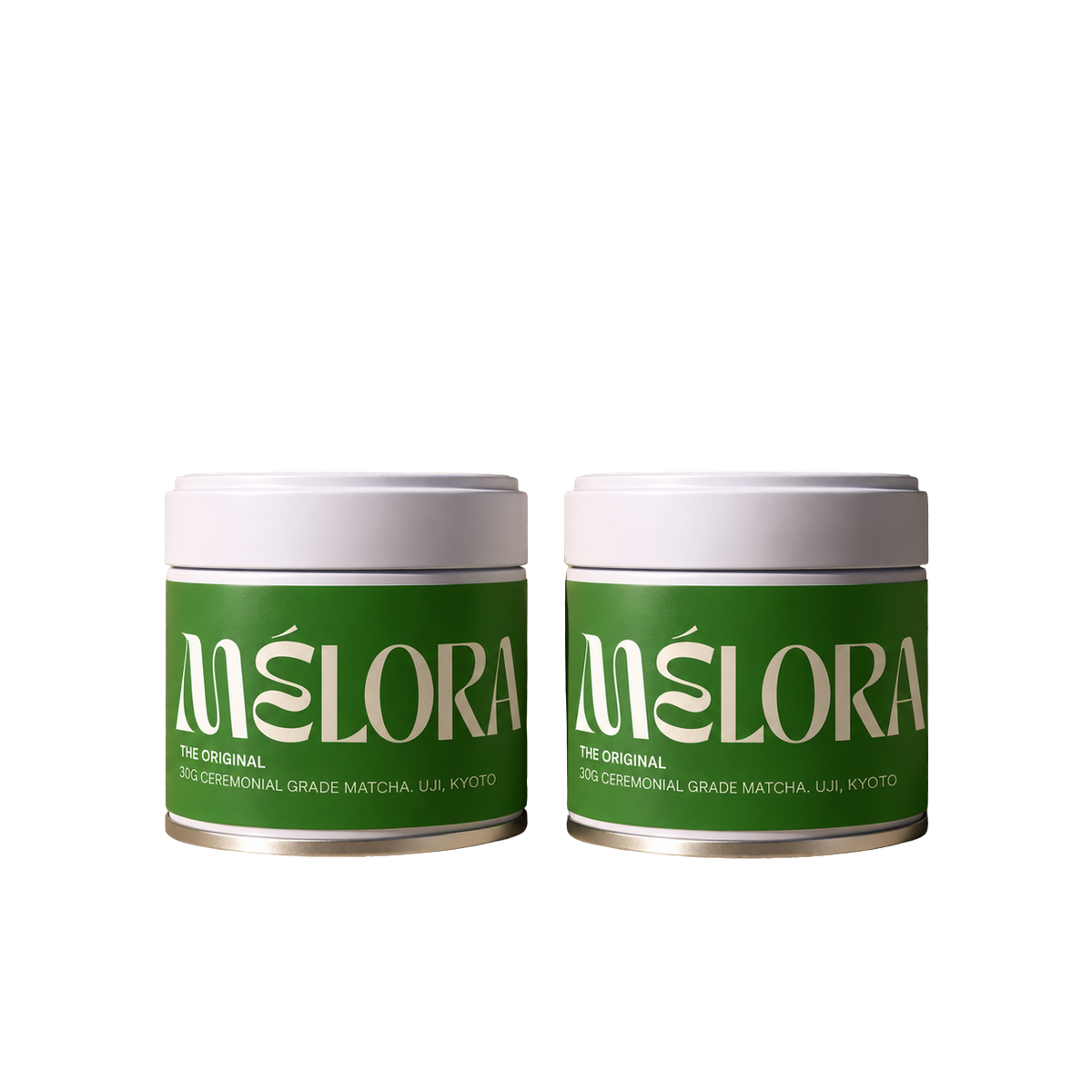
A 30g tin of Mélora ceremonial grade matcha - enough for 10 to 15 bowls - is $39. For a café using culinary grade powder at volume, the cost per serve is a fraction of that.
When you're paying $8 or $9 for a matcha latte, the matcha itself might cost the café less than a dollar. The rest is labour, milk, overhead, and margin. There's nothing wrong with that - it's how hospitality works - but it explains why what's in the cup isn't what ceremonial grade tastes like.
The milk hides a lot
Whole milk, oat milk, and almond milk all have their own flavour profiles - fat, sweetness, creaminess. When you add a teaspoon of culinary matcha to 200ml of oat milk, the milk is doing most of the talking. The matcha adds colour and a background bitterness that registers as "matcha flavour" without actually delivering the nuance of a good ceremonial grade.
The same is true for sweetener. Sugar masks bitterness - which is why so many café matcha orders default to one or two pumps of syrup. With ceremonial grade matcha made properly, you don't need it. The sweetness is already there.
This isn't a criticism of cafés
Cafés serve what their customers expect and what their margins support. A good café matcha latte, made well with quality milk and good technique, is a genuinely enjoyable drink.
But it's a different product to a bowl of ceremonial grade matcha made at home. The two aren't really competing - they just get conflated because they share a name.
Once you taste the difference, the $39 tin starts to look very good value.
The case for making it at home
A 30g tin of Mélora matcha makes between 10 and 15 bowls, depending on how you like it. At $39, that works out to roughly $2.60 to $3.90 per serve - for a product that's genuinely ceremonial grade, single-origin from Uji, and better than what most cafés are serving.
The ritual takes five minutes. The flavour is completely different. And once you know how to make it well, there's very little reason to pay $9 for the inferior version.