Japanese vs Chinese Matcha: What's Actually Different

Category: Education | Reading time: ~4 min
Not all green powder is the same. Here's what separates them.
Walk into any supermarket and you'll find green powder marketed as matcha. Some of it is $8. Some is $45. And unless you know what you're looking at, the packaging isn't going to tell you much. One of the most significant and least talked about factors behind that price and quality gap is where the matcha was grown and how it was made. Japan and China both produce it. What they produce is not the same thing.
Why Origin Actually Matters
Matcha isn't just ground green tea. It's a specific product with a specific method behind it, one that Japan has been refining for centuries. The Japanese approach to matcha involves shade-growing the tea plants for three to four weeks before harvest, a labour-intensive process that dramatically increases chlorophyll and L-theanine levels in the leaf. This is not a modern quality-control measure. It's a centuries-old practice embedded in how Japanese producers understand the crop.
Chinese matcha exists, and it's often significantly cheaper. But the shading step is frequently shortened or skipped altogether. Without it, the leaf doesn't develop the same amino acid profile, which means less umami, more bitterness, and a flatter taste. The gap in flavour isn't subtle. If you've ever made matcha that tasted more like grass clippings than anything else, origin is likely part of the answer.
The Grinding Process - Slower Than You'd Think
Once harvested, the leaves are steamed, dried, and ground into powder. How they're ground matters more than most people realise. Traditional Japanese matcha is stone-ground - granite millstones turning slowly at roughly 30–40 grams per hour. That pace isn't inefficiency. It prevents heat build-up during grinding, which would damage the chlorophyll and degrade the flavour compounds.
Chinese matcha is mostly processed by high-speed mechanical milling. It's faster and cheaper, but the heat generated affects the final product - dulling the colour and softening the taste profile in ways that compound when you're comparing it side by side with properly stone-ground powder. You can also taste the difference in texture. Japanese matcha dissolves silkily. The mechanically milled alternative tends to be grainier and produces less foam when whisked.
Colour Is the Giveaway
Put the two side by side and the colour difference is usually obvious. Japanese ceremonial matcha is a vivid, bright green - almost iridescent in good light. Chinese matcha tends toward dull olive, sometimes with yellow or brown undertones. As covered in an earlier Mélora post, colour is one of the most reliable indicators of quality you have before you taste anything. That dullness isn't cosmetic. It reflects lower chlorophyll content, less careful processing, and often older or sun-grown leaves.
Taste - The Bottom Line
Japanese matcha, particularly from established regions like Uji in Kyoto, has a sweet, umami-forward flavour with low bitterness. The L-theanine content is high, which contributes both to the smooth flavour and to that distinctive calm focus. Chinese matcha, in most cases, is more bitter and flat. It can work fine as a baking ingredient where flavour nuance is secondary. As a drink and especially as a daily ritual it's a noticeably different experience.
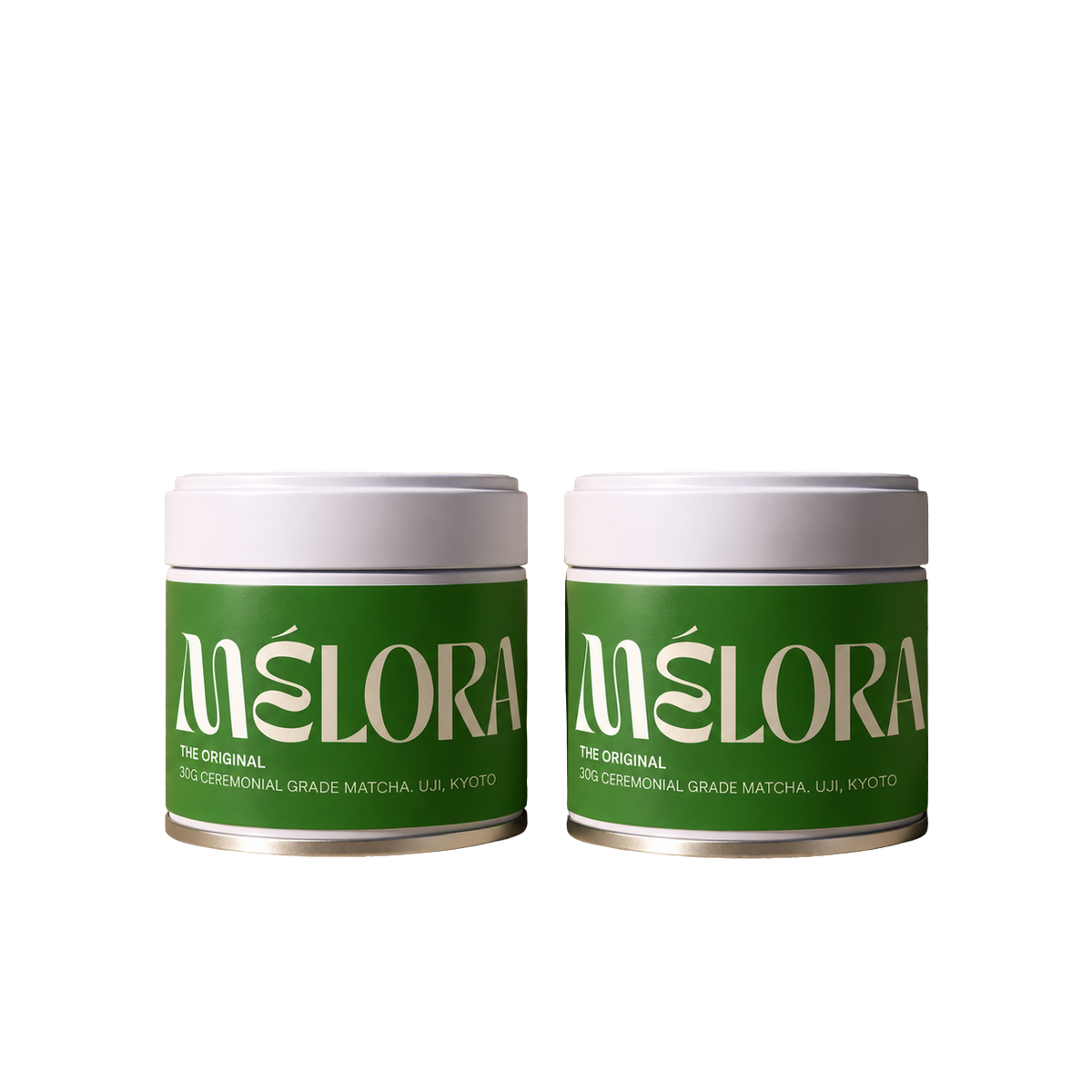
This is why Mélora sources exclusively from Uji. It's not regionalism for its own sake. Uji has some of the oldest and most developed matcha-growing traditions in Japan. The stone-ground, shade-grown ceremonial grade coming out of those farms is genuinely different from what a bulk Chinese supplier is producing at a fraction of the cost. The difference is in the cup.
What to Look For When You're Buying
If a product doesn't specify its origin, that's worth noting. Brands that source from Japan and specifically from named regions like Uji, Yame, or Kagoshima, tend to say so, because it's a selling point. When origin isn't mentioned, it often means the matcha was sourced from China or blended, and the price point usually reflects it.
Look for: clear Japanese origin, stone-ground processing, shade-grown leaves, a vivid green colour. Smell it fresh from the tin, it should have a sweet, grassy aroma. Hay-like or flat means it's past its best or wasn't great to start with. The criteria aren't complicated. You just need to know what you're looking for.
Sources
1. Matcha.com — The Difference Between Japanese and Chinese Grown Matcha
https://matcha.com/blogs/news/
2. MatchaJP — Japanese Matcha vs Chinese Matcha
https://www.matchajp.net/
3. Far East Tea Company — Japanese vs Chinese Matcha — What Actually Differs
https://fareastteacompany.com/