Ceremonial vs Culinary Grade Matcha: What Actually Separates Them

Category: Education | Reading time: ~4 min
If you've spent any time looking at matcha online, you've probably seen these two terms used everywhere. Ceremonial grade. Culinary grade. Sometimes with a significant price difference, sometimes without much explanation for why.
Here's the honest breakdown.
It starts in the field
The most important difference between ceremonial and culinary grade matcha isn't in the packaging or the marketing - it's in how the tea plant is grown before harvest.
Ceremonial grade matcha comes from leaves that have been shade-grown for around 20 to 30 days before picking. The plants are covered - traditionally with bamboo and straw, now often with purpose-built shade cloth - which blocks out the majority of sunlight. This does something important: it forces the plant to produce more chlorophyll and L-theanine (an amino acid) as it works harder to photosynthesize in low light.
The result is a brighter, more vivid green leaf with a naturally sweeter, more umami-rich flavour profile - and less of the bitterness associated with lower grade matcha.
Culinary grade matcha is grown with less shading, or sometimes none at all. The leaves are also typically harvested later in the season - second or third flush rather than first - when the plant is more mature and the flavour compounds have shifted toward astringency and bitterness.
Then comes the processing
For ceremonial grade, the stems and veins of the leaf are carefully removed before grinding. What remains is the pure leaf matter - called tencha - which is then stone-ground into the fine powder we know as matcha. This process is slow by design; quality stone mills grind at around 30 revolutions per minute to avoid generating heat that would damage the delicate flavour compounds.
Culinary grade retains more of the stem and vein. It's still ground into powder, but the resulting flavour is stronger, more bitter, and less refined - which is actually fine when you're baking with it or adding it to a smoothie where other flavours are present.
What this means in the cup
Ceremonial grade is designed to be enjoyed on its own - just matcha and water. The flavour should be smooth, naturally sweet, complex, and layered with umami. It should not require sweetener or milk to make it palatable. If your matcha is bitter or harsh when prepared correctly, it's not ceremonial grade - regardless of what the label says.
Culinary grade works well in lattes, baked goods, and recipes where the matcha is one flavour among many. Using it as a straight bowl of matcha would produce a drink most people would find unpleasant.
The colour tells you a lot
Fresh ceremonial grade matcha is vivid - a bright, vibrant emerald green. Culinary grade tends toward a deeper, duller shade. If your matcha looks yellow-green or olive, it's either lower grade or it's past its best.
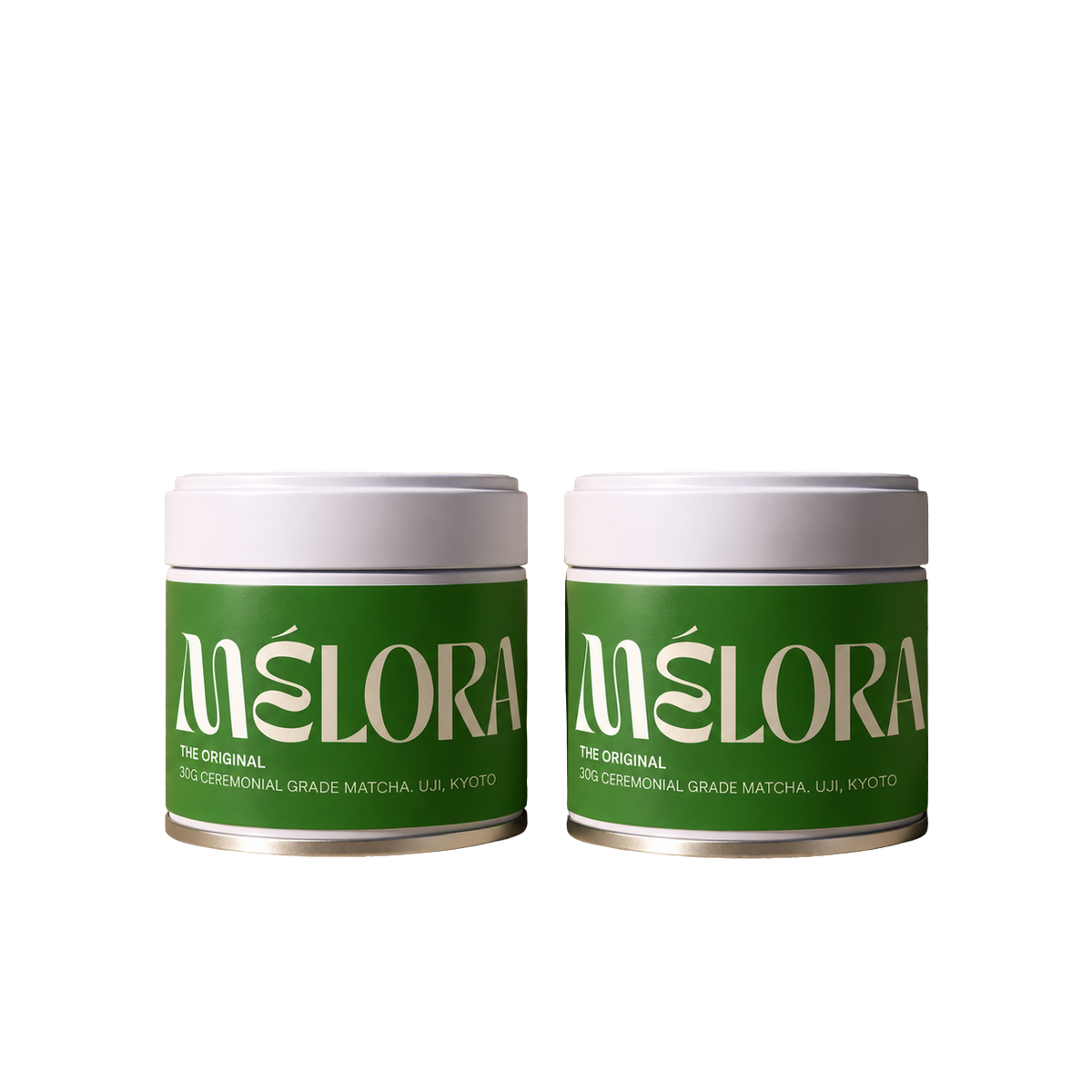
This is one of the easiest checks you can do. Open the tin and look. Mélora's matcha should look almost luminous - that colour is one of the clearest indicators that what you're holding is the real thing.
So which one should you buy?
If you're making a bowl of matcha - just powder and water, the traditional way - buy ceremonial grade. The difference is not subtle. You're paying for a fundamentally different experience.
If you're making matcha cookies, matcha cake, or a latte you're loading up with oat milk and syrup - culinary grade works and there's no reason to use your ceremonial tin for it.
At Mélora, we only produce ceremonial grade. It's what we sourced, it's what we believe in, and it's the only grade worth drinking on its own.
Sources: Nio Teas - Ceremonial Matcha vs Culinary Matcha Explained: nioteas.com