Matcha vs. Coffee: The Honest Comparison

Category: Education | Reading time: ~5 min
If you've ever switched from coffee to matcha and wondered why you feel different - calmer, clearer, without the jitters - there's a reason for that. It's not a placebo. It's chemistry.
This isn't an article about why you should quit coffee. It's an honest look at what each drink actually does to your body and brain, so you can make an informed choice - or decide there's room for both.
The Caffeine Numbers
Let's start with facts. A standard 230ml cup of coffee contains roughly 96 mg of caffeine. A single-serve matcha (2g of powder) delivers somewhere between 38–70 mg, depending on the quality and preparation. Double the matcha and you're in comparable territory.
So matcha isn't caffeine-free - and it was never meant to be. What makes it different isn't the amount of caffeine. It's what comes with it.
Enter L-Theanine
Matcha contains an amino acid called L-theanine, which is found in very few foods outside of green tea. L-theanine crosses the blood-brain barrier and increases alpha brain wave activity - the state associated with calm, alert focus. Think: the feeling you get when you're deeply absorbed in something without being anxious about it.
Research published in the journal Nutritional Neuroscience found that L-theanine and caffeine together improve cognitive performance and sustained alertness more effectively than caffeine alone. The L-theanine doesn't cancel out the caffeine - it smooths it.
That's the combination matcha gives you in every bowl.
The Crash Question
Coffee gives you a fast spike. Caffeine from coffee reaches peak blood concentration quickly - sometimes within 15 minutes - which is why that first cup hits hard. For a lot of people, what goes up fast comes down just as fast. The afternoon slump is real, and it's partly caffeine-related.
Matcha works differently. The L-theanine slows the absorption of caffeine, which means the energy arrives more gradually and lasts longer. No spike, no cliff. You stay functional for longer without the need to reach for another cup.
This is part of why Japanese monks used matcha during long meditation sessions - sustained, clear-headed focus, not stimulation for its own sake.
What Coffee Does Better
Honesty requires balance. Coffee has a more immediate kick, which some people genuinely need - early mornings, long nights, physical work. It's also more forgiving to make. A drip machine is harder to mess up than a poorly whisked matcha.
Coffee also has its own well-documented health benefits: antioxidants, reduced risk of certain diseases, improved physical performance. It's not the enemy.
If your goal is maximum caffeine, fast, coffee wins. If your goal is clean, sustained focus with less anxiety and a better crash profile, matcha is the better tool.
Quality Changes the Equation
One thing worth saying: not all matcha delivers this experience. Low-grade matcha — the kind used in most café lattes - has a fraction of the L-theanine content of ceremonial grade. It also tends to be bitter, which is often why people assume they don't like matcha.
Ceremonial grade matcha from a reputable source - shade-grown, first harvest, stone-ground - has significantly higher L-theanine concentration. That's the version that actually delivers the calm-focus effect people talk about.
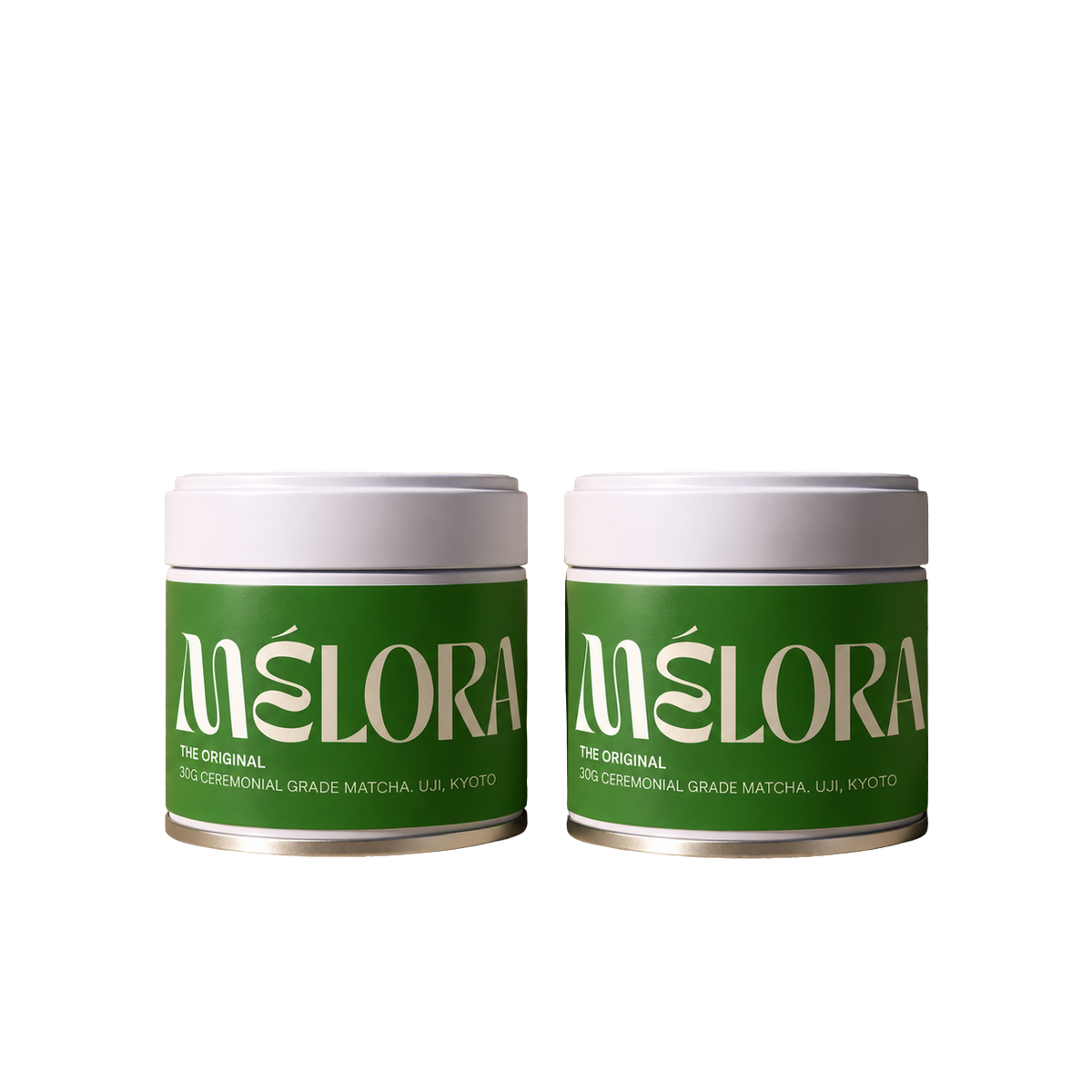
Mélora's matcha is sourced from Uji, Kyoto, from producers who have been doing this for generations. The difference is in the leaf, which is why the experience is different.
So, which one?
That depends on what you're after. Some people find that swapping their second or third coffee of the day for matcha is the sweet spot - they keep the morning ritual they love and cut the afternoon crash.
Others switch entirely and don't look back.
There's no single right answer. But if you've been relying on coffee for focus and ending most afternoons in a fog, matcha is worth trying properly - once, with good quality powder, made the right way.
You might be surprised.
Shop Mélora's Ceremonial Grade Matcha here
Sources
1. Haskell, C.F. et al. (2008). "Cognitive performance, mood and endocrine changes following administration of a multi-vitamin and mineral supplement with and without guarana." Published findings on L-theanine + caffeine combination and cognitive alertness. PubMed: https://www.google.com/url?q=
2. Gomez-Ramirez, M. et al. (2008). "The deployment of intersensory selective attention: a high-density electrical mapping study of the effects of theanine." Nutritional Neuroscience. Alpha brain wave activity and L-theanine. PubMed: https://www.google.com/url?q=
3. Healthline: Matcha vs. Coffee — Differences, Pros, and Cons. https://www.google.com/url?q=